What to Expect at Your First BJJ Class
If you want to know what to expect at your first BJJ class, expect a real group class, not a private orientation. A typical class includes technique instruction, partner drilling, and possibly positional or live rounds. The exact format, partner, and amount of live training can vary. You are not expected to arrive fit, know the rules, or remember every movement on day one.
The uncertainty before class is often harder than the class itself. We do our best to greet every newcomer, but the gym can get busy. If we miss you, check in, tell a coach you are new, ask questions when you need to, and follow the other members as they get onto the mat. Here is the honest walkthrough for adults who are curious about beginner jiu-jitsu in Flint.
Your first BJJ class at a glance
- Arrive about 10 minutes early, check in, and tell a coach it is your first class.
- Wear the right clean gear for gi or no-gi and leave shoes off the mat.
- Follow the group into the warmup and ask if you are unsure where to go.
- Watch the coach demonstrate a position or technique.
- Practice it with a partner at a cooperative pace.
- Decide whether to join positional or live rounds. Live rounds are always optional.
- Ask questions, cool down, and decide whether you want to return.
The exact lesson changes from day to day. Beginner sessions sometimes run on their own and sometimes operate within an all-levels class. The class follows the coach's pace, but you can ask questions, tap whenever you need to, and sit out live rounds.
What should you wear to your first jiu-jitsu class?
For no-gi, wear a fitted T-shirt or rash guard with athletic shorts or leggings. Choose clothes without zippers, metal pieces, or loose pockets that can catch a finger or toe. For a gi class, bring your own clean gi. Great Lakes BJJ does not provide loaner gis, so contact us before booking a gi class if you do not own one. For either format, bring water, trim your fingernails and toenails, and arrive in clean gear.
Shoes never go on the training mat. Wear sandals or shoes when you are off the mat, including in the restroom, then leave them at the edge before training. It is a small rule with a practical purpose: everyone shares the same surface, so everyone helps keep it clean.
What happens when you arrive?
Check in and tell a coach you are new. We do our best to greet everyone, but a busy class can move quickly. If nobody reaches you right away, ask a coach when you have the chance or follow the other members as they put away their belongings and get onto the mat. You do not need to memorize every piece of etiquette before joining the group.
Tell the coach about an old injury, limited range of motion, or anything else that affects how you move. That is useful information, not an apology. It helps the coach understand what you can safely do. If you have a medical concern about starting a contact sport, talk with a qualified health professional before class.
The warmup is practice, not a fitness test
A jiu-jitsu warmup may include hip escapes, bridges, technical stand-ups, rolls, or light partner movement. Some of it will look unfamiliar. That is normal because these movements are part of the sport, not prerequisites you were supposed to learn at home.
You may get winded. Most first-timers do. Stop for water or slow down when you need to. Nobody is scoring the warmup, and getting tired does not mean you failed. If conditioning is the part holding you back, read our honest answer to whether you need to get in shape before starting jiu-jitsu.
How technique instruction works
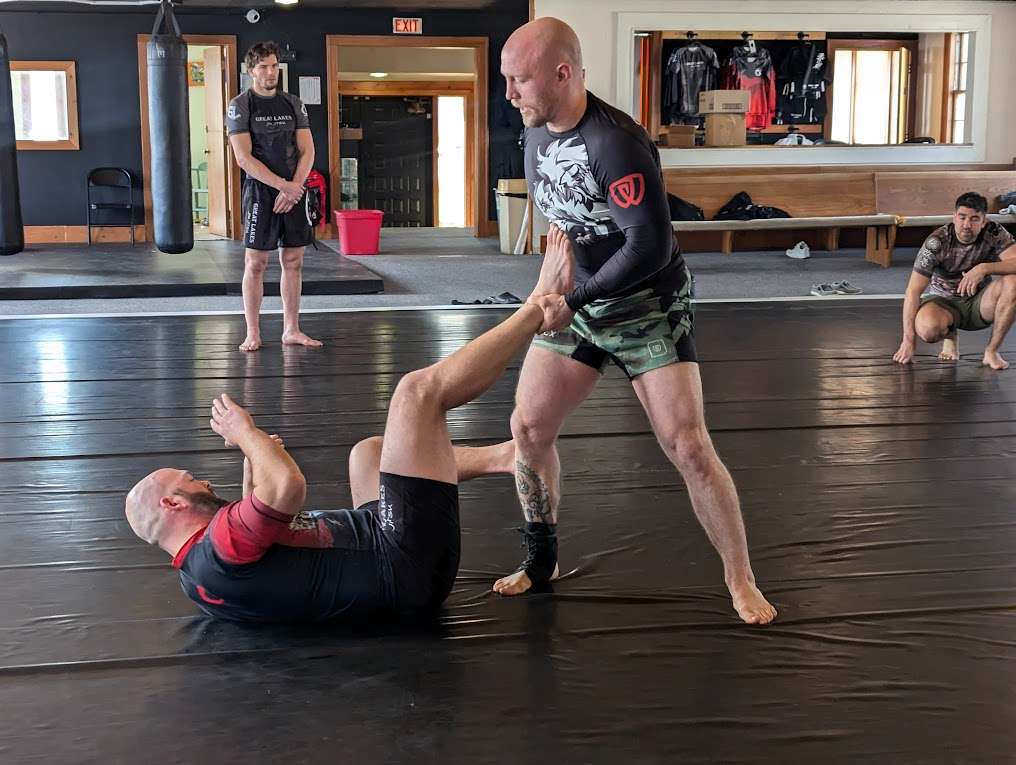
The coach gathers the class, demonstrates a position, and breaks the movement into steps. A beginner lesson might cover escaping from underneath someone, maintaining balance, controlling a position, or getting back to your feet safely. You watch first, then practice with a partner.
Drilling is not fighting. Your partner gives you the position so you can learn the movement. You reset and repeat, then switch roles. Ask when something does not make sense. You will forget steps. Everyone does.
Good partners do not punish beginners for being new. They help create enough structure for both people to improve. At Great Lakes BJJ, the coaching and pairing matter as much as the technique itself.
Will you have to spar or roll?
Not every first class includes open sparring. Some beginner sessions use positional rounds, while others may move into regular live rounds, especially when the beginner session is combined with an all-levels class. Positional rounds start in a defined position and reset when one person reaches the assigned goal.
Live rounds are always optional. You can observe, try a round, or stop if you are not ready. If you participate, tell the coach and your partner that it is your first day. You may work with an experienced member, which is normal and can be helpful. Jiu-jitsu is still a contact sport, so expect physical pressure, fatigue, awkward movement, and the possibility of accidental bumps even when both people are trying to train responsibly.
What does tapping mean?
Tapping is the safety signal that ends the action immediately. Tap your partner clearly with your hand, tap the mat if your hands are trapped, or say “tap.” You can tap because a submission is on, because something hurts, or because you feel unsafe and need the round to stop. Your reason does not need approval.
Tap early while you are learning. Your partner releases, you reset, and training continues. Tapping is not losing. It is how both people practice tomorrow.
What your first class is supposed to tell you
One class will not tell you whether you are naturally good at jiu-jitsu. It will tell you more useful things:
- Did the coach explain things clearly?
- Did partners treat you with patience and control?
- Could you ask questions without feeling like a problem?
- Did the room feel focused without being hostile?
- Did you leave curious enough to try a second class?
Those are better first-day measurements than how many techniques you remembered. You are evaluating the gym while the gym is teaching you.
Beginner BJJ classes in Flint
Great Lakes BJJ has beginner-designated adult classes in both gi and no-gi formats. These sessions sometimes run separately and sometimes combine with an all-levels class. The current schedule includes beginner no-gi on Tuesday and Thursday at 6:00 p.m. and beginner gi on Wednesday at 6:00 p.m. Class times can change, so use the live schedule before you leave home.
You can also compare all adult training options, learn more about Brazilian jiu-jitsu in Flint, or request your first class. Eligible programs include a 14-day trial, with no experience required.
You do not need to feel ready before you arrive. You only need enough curiosity to walk in and let the first class answer the rest.